

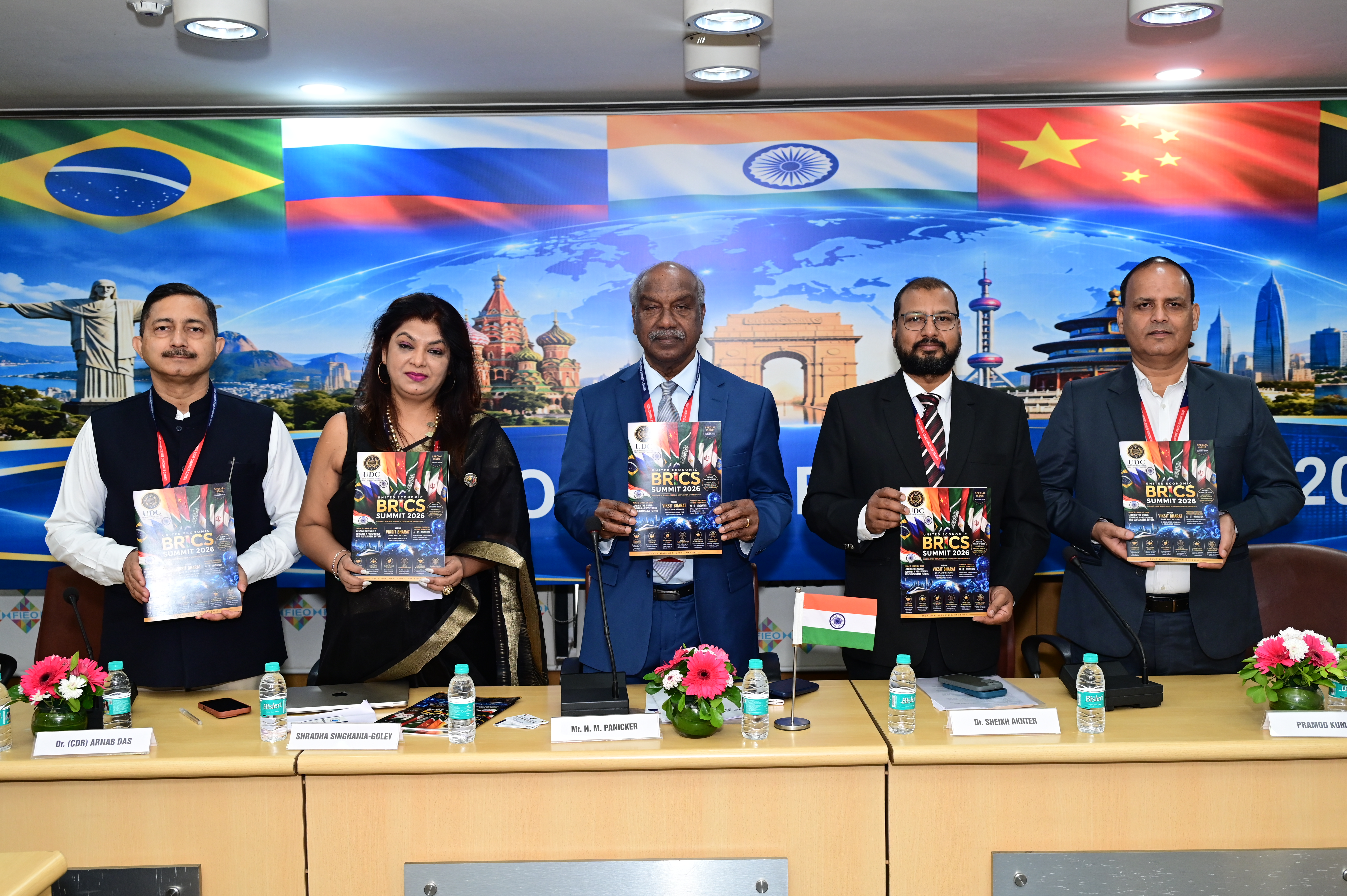
For BRICS, the maritime domain is becoming increasingly difficult to treat as a separate sector. The oceans carry around 80% of global trade by volume, connect production centres with markets, support millions of livelihoods and remain critical to energy and food security. When a major maritime route is disrupted, the consequences are felt not only by the countries surrounding that waterway, but by businesses, consumers and economies across the world. It is against this backdrop that maritime cooperation, maritime connectivity and ocean security assumed particular importance at the UDC United Economic BRICS Business Summit 2026 in New Delhi, India, where the discussion on maritime connectivity explored what stronger cooperation could mean for trade, security, technology, sustainability and the communities that depend on the oceans.
The larger question emerging from the discussion was not simply how BRICS countries can protect their maritime interests, but how they can use the maritime domain to deepen economic cooperation. For a grouping whose members are connected to some of the world’s most important trading routes, ports and coastal economies, resilient maritime connectivity is closely linked to the resilience of BRICS itself. Mr. N. M. Panicker, Chairman of the Maritime India BRICS Trade Council, captured this relationship by noting that “resilient maritime connectivity is fundamental to resilient trade, and therefore to the economic ambitions of BRICS.” Maritime infrastructure, shipping, logistics and secure sea lanes consequently form part of the wider economic architecture through which India, Brazil, Russia, China, South Africa, Egypt, Ethiopia, Iran, the United Arab Emirates and other BRICS members engage with one another and with global markets.
Recent disruptions to strategic waterways have made this interdependence increasingly visible. The Strait of Hormuz, for instance, demonstrates how instability along a single maritime corridor can have repercussions for energy supplies, shipping costs and international trade. Such developments strengthen the case for maritime diplomacy and maritime security cooperation that are capable of anticipating vulnerabilities, improving coordination and building alternative forms of resilience rather than responding only after disruption occurs.
Yet maritime security cannot be separated from the health of the oceans or the wellbeing of the people who live along their shores. This was one of the strongest themes to emerge from the discussion. Dr. (Cdr) Arnab Das, Founder and Director of the Maritime Research Centre, underlined this human dimension, stating, “The strength of maritime governance comes from combining scientific capability with the knowledge and participation of coastal communities.”
His proposed 100 Coastal Warriors initiative reflects this approach by bringing together three different forms of expertise: scientists working with advanced hardware and software, specialists interpreting data and translating it into policy, and fishing communities contributing through field-level observation and water-sample collection. The approach highlights how coastal resilience, marine sustainability and community participation can become integral components of a wider maritime strategy.
Technology can significantly expand these possibilities. Drones and unmanned systems, for example, can support maritime surveillance, border security, disaster response, agriculture and public safety. Dr. Sheikh Akhter of SCO Unmanned System highlighted the potential of such technologies while drawing attention to a less visible challenge: moving from technological capability to practical deployment requires funding, testing, certification and agreed standards. He suggested that BRICS could help address this gap by becoming a platform for technology exchange and cooperation, observing that “BRICS can become a platform for sharing technology, experience and common standards rather than each country solving the same problem independently.”
Such cooperation could be particularly valuable for the Global South, where maritime challenges often differ from those for which existing technologies and regulatory models were developed. Tropical waters, different coastal ecosystems, developing port infrastructure and the socioeconomic realities of fishing communities require solutions that are locally relevant. The discussion therefore raised an important principle for BRICS: cooperation should not mean adopting a single model, but developing the ability to share knowledge while adapting solutions to regional conditions.
Shradha Singhania-Goley of Under The Bodhi Tree brought together this broader understanding of the maritime agenda, highlighting the need to see its different challenges as connected rather than isolated. “Maritime cooperation becomes meaningful when security, sustainability, technology and communities are brought into the same conversation.” Her perspective reflects the growing recognition that the future of the blue economy, marine sustainability and maritime development is closely connected to the economic and social priorities of coastal nations.
There is also a wider geopolitical and economic dimension. Maritime connectivity can provide a practical link between different regional groupings and economic corridors. Pramod Kumar, Honorary Trade Commissioner, SCO Trade Council, highlighted the potential for stronger maritime cooperation between BRICS and the Shanghai Cooperation Organisation (SCO), noting that “Maritime cooperation can serve as a bridge between BRICS and the SCO, supporting seamless, resilient and inclusive trade corridors that connect member states with global markets.”
This perspective places the ocean within a much larger conversation about global trade, connectivity and supply-chain resilience. A ship reaching a port is only one part of a trade journey. Goods must then move through logistics networks, borders, transport corridors and markets. Building resilient maritime connectivity therefore requires coordination across institutions and regions. Greater engagement with bodies such as the International Maritime Organization (IMO), alongside stronger regulatory mechanisms, technological cooperation and common standards within BRICS, could help turn this interconnectedness into practical cooperation.
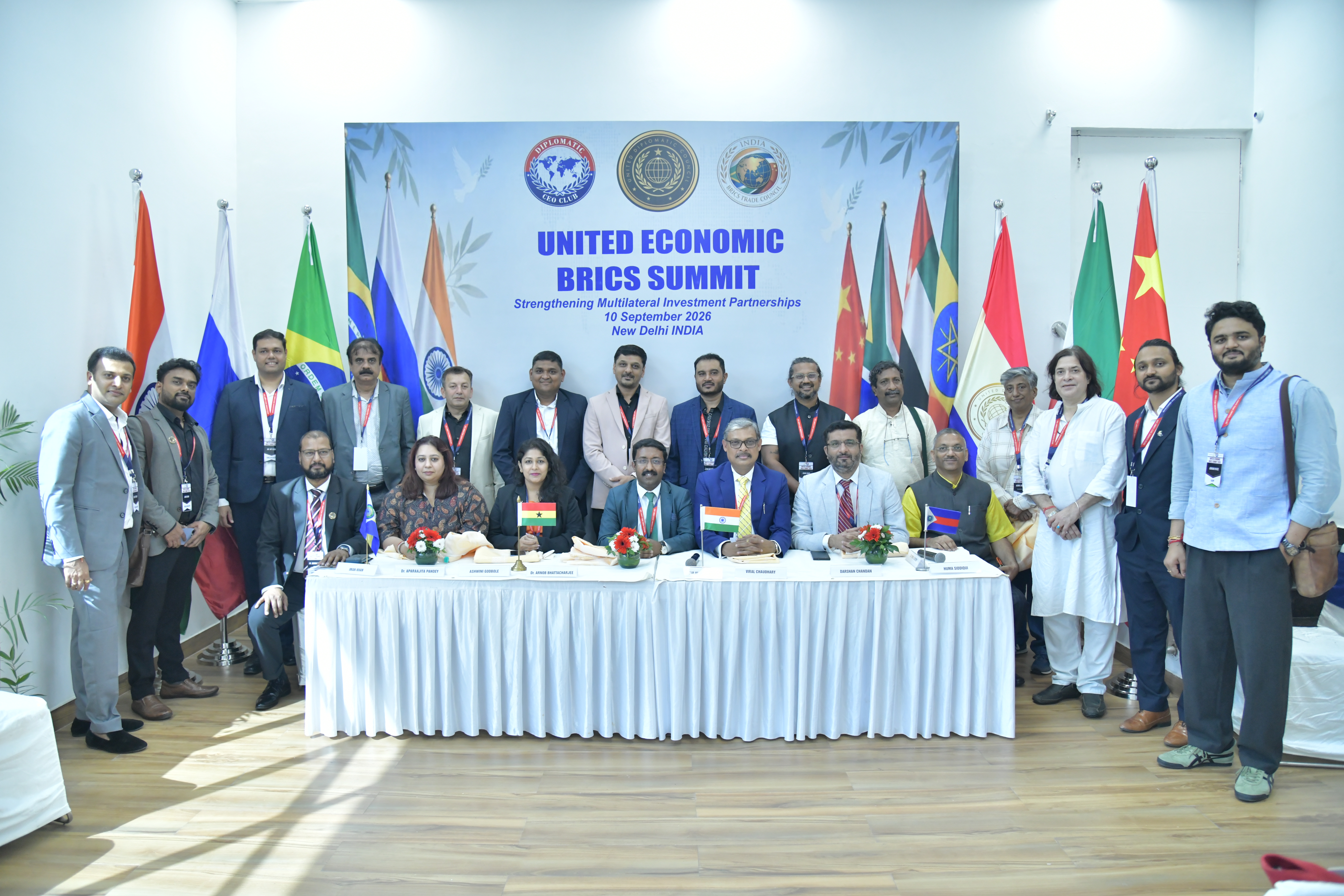
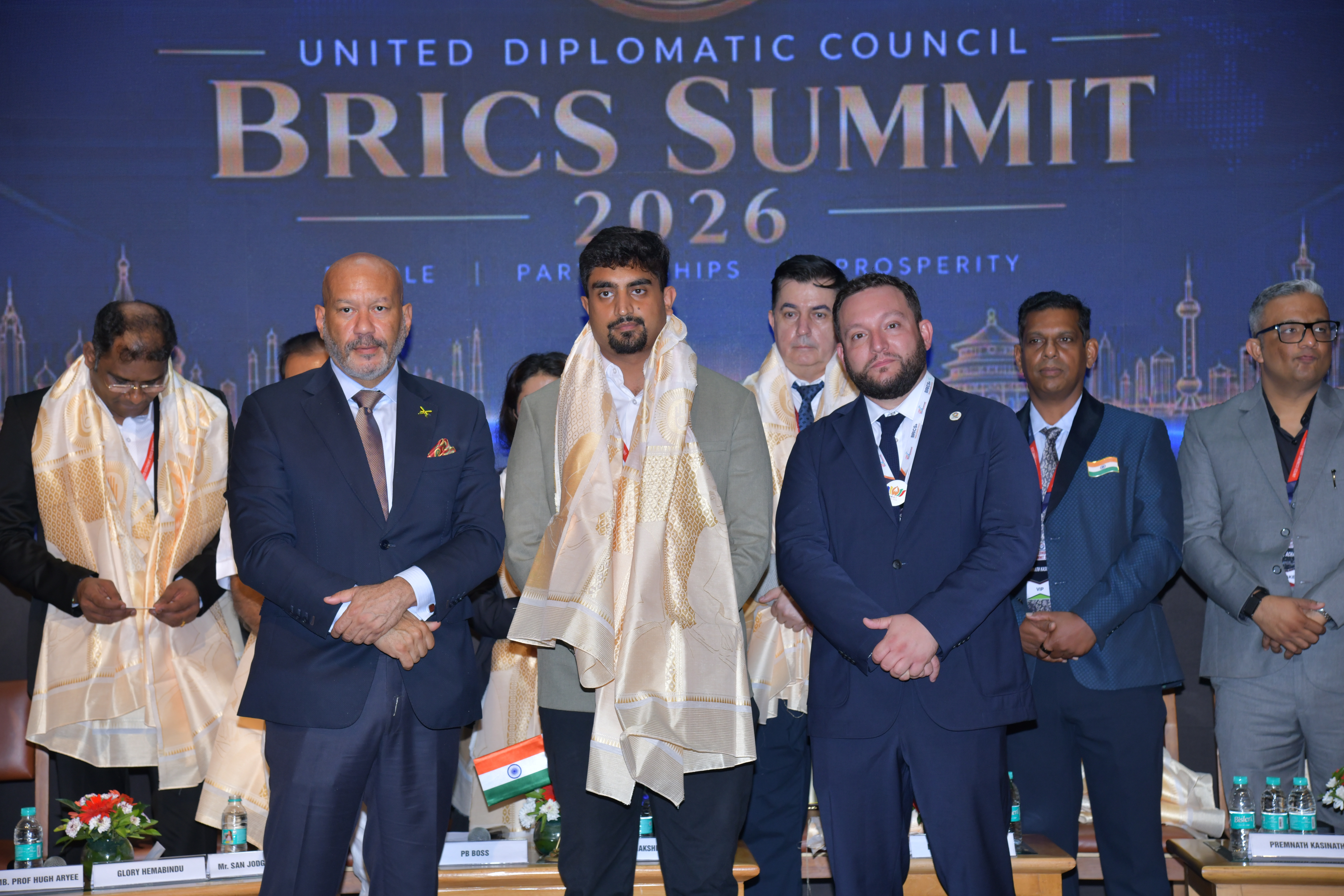
For India, the maritime conversation also carries particular significance. With its extensive coastline, major ports, growing shipping and logistics sector and strategic position in the Indian Ocean, India occupies an important place in discussions around maritime trade, ocean economy, blue economy and regional connectivity. New Delhi’s role as the host of the UDC United Economic BRICS Business Summit 2026 provided an appropriate setting for bringing together business leaders, trade representatives, maritime experts and international stakeholders to examine how cooperation across oceans can support cooperation across economies.
The maritime conversation at the UDC BRICS Summit 2026 ultimately pointed towards a broader understanding of what the oceans represent for BRICS. They are trade routes, but also ecosystems. They are strategic spaces, but also sources of livelihood. They are technological frontiers, but also community spaces. And they connect not only countries, but entire economic regions across Asia, Africa, Latin America, the Middle East and the wider Global South.
Reflecting on the wider purpose of the summit, Dr. Asif Iqbal, President of the United Diplomatic Council, said, “The future of global economic cooperation will depend on our ability to build bridges across regions, sectors and nations. Maritime cooperation gives BRICS an opportunity to transform connectivity into meaningful partnerships, linking trade, technology, sustainability and people across the Global South.”
The central message was therefore not simply that the oceans need protection, but that the future of economic cooperation itself depends upon how effectively nations cooperate across them. For a grouping seeking stronger connectivity across the Global South, BRICS maritime cooperation, maritime security, shipping, logistics, blue economy and resilient trade corridors offer important pathways from diplomatic dialogue to practical economic partnership.










Leave a Reply