

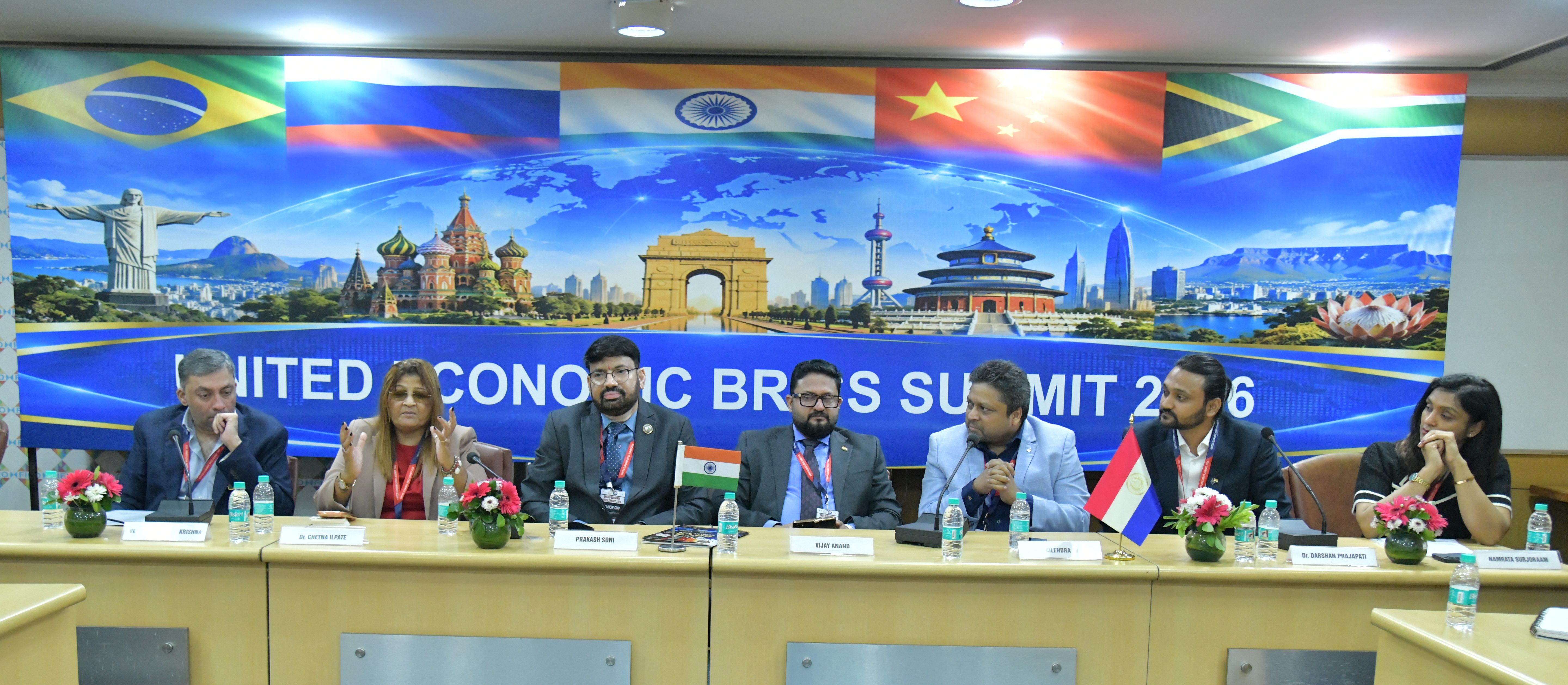
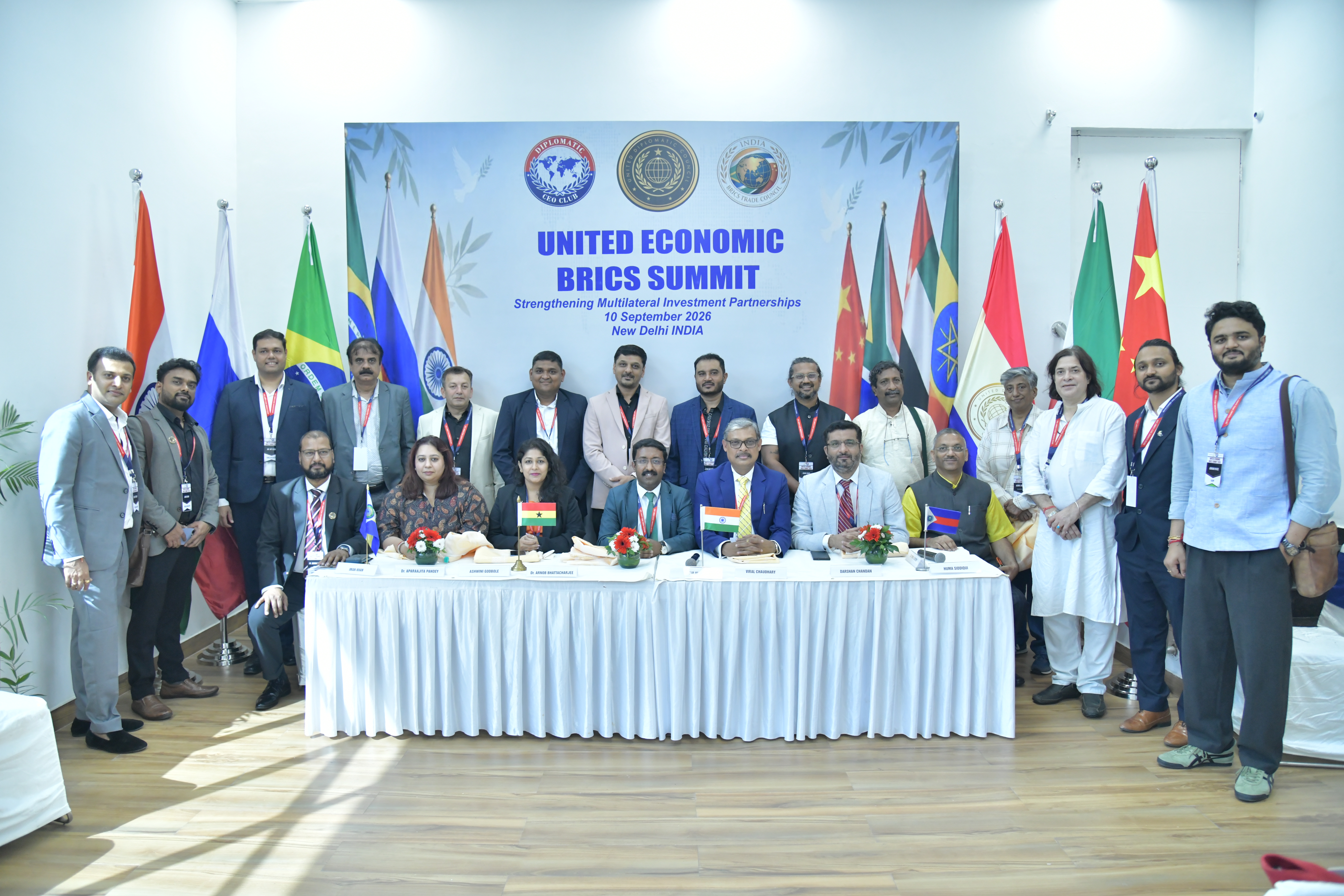
The United Diplomatic Council (UDC) BRICS Business Summit 2026 brought together business leaders, trade representatives, entrepreneurs and professionals to examine how BRICS cooperation with Africa can evolve into practical economic partnerships. Among the key discussions was the conference on BRICS Africa Cooperation, held under the theme “Peoples | Partnerships | Prosperity – A Shared BRICS Future.”
The session brought together a diverse group of voices from healthcare, education, technology, manufacturing, shipping, entrepreneurship and international business. Trade Commissioners from the India Africa Trade Council and other associated trade councils also participated in the discussion, bringing perspectives shaped not only by their roles in economic diplomacy but also by their individual business and professional experience. This combination added a practical dimension to the conversation, connecting the institutional perspective of international trade with the realities faced by businesses operating across markets.
The discussion opened with the broader importance of people and relationships in building sustainable economic partnerships. Shailendra Jain, brought attention to the role of trade and diplomatic networks in connecting businesses across India and Africa. “India–Africa cooperation must ultimately be measured by the relationships it creates between our people, businesses and institutions. Trade diplomacy has its greatest value when it opens doors for practical partnerships,” Jain observed.
A recurring theme throughout the session was the importance of viewing Africa not merely through the lens of its natural resources or as a destination for external investment, but as a continent with considerable potential for manufacturing, innovation, entrepreneurship, healthcare development and value-added production.
Healthcare emerged as one of the most pressing areas for cooperation. Several African countries continue to face challenges relating to healthcare infrastructure, specialised medical facilities, trained professionals and access to medical education. Vijaykumar Ramakrishna from Sri Ramakrishna Hospital, emphasised the importance of developing healthcare capabilities within African countries rather than relying solely on external supply.“A sustainable healthcare partnership must build capacity at the local level. Infrastructure, medical education, technology and trained professionals have to develop together if healthcare cooperation is to create lasting impact,”he said.
Dr. Chetna Ilpate, CEO, Brilliant Brains Pvt. Ltd., brought the discussion towards human capital and the importance of education and knowledge in strengthening Africa’s development capabilities. “The most valuable investment between India and Africa is an investment in knowledge. When education, skills and enterprise develop together, cooperation moves from dependency towards capability,” Dr. Ilpate said.
The question of value creation within Africa was another significant part of the discussion. Agriculture, pharmaceuticals and manufacturing were identified as sectors where greater local processing could substantially change the economic impact of trade.
The importance of this approach was reflected in the contribution of Namrata Surjoraam, Global Head, Human Online, South Africa, who brought a perspective centred on people, enterprise and the changing African business environment.
“Africa’s greatest opportunity is not simply in what it exports, but in what it can build. The next phase of cooperation must create opportunities for African businesses and professionals to participate as partners in value creation,” she said.
Technology and entrepreneurship formed another important strand of the conversation. Africa’s young population and rapid adoption of digital technologies are creating new opportunities for businesses and start-ups to develop solutions suited to local markets. Vijay Anand, Founder, Zunex UAE, highlighted the importance of connecting entrepreneurship with international markets and ensuring that technology partnerships respond to the actual requirements of individual economies.
This principle was particularly relevant to the conversation around infrastructure, shipping and logistics. Efficient movement of goods is essential to expanding India–Africa trade, particularly for manufacturing, agriculture and processed products. Ports, shipping networks, warehousing, customs processes and reliable supply chains can determine whether a promising commercial relationship develops into a sustainable one.
Dr. Darshan Prajapati, Director, JD Impex and Shipping Pvt. Ltd., brought the maritime and logistics perspective to the discussion, highlighting the importance of connectivity in supporting greater economic integration.“Trade partnerships can only reach their full potential when the physical systems supporting them are efficient. Ports, shipping and logistics are not simply support services; they are part of the economic partnership itself,” Dr. Prajapati said.
Prakash Soni, CMD, Sai Cabtech P. Ltd., reflected on the perspective of industry and the need to create practical conditions for businesses to participate in international cooperation.“For industry, international cooperation becomes meaningful when the environment allows businesses to invest, operate and grow with confidence. Clear processes, infrastructure and institutional support are essential for converting opportunities into enterprises,” Soni noted.
An important dimension running through the discussion was the role of the Indian diaspora and people-to-people relationships. Business networks are often strengthened by communities that understand both markets and can provide cultural, professional and commercial connections.
The theme of “Peoples | Partnerships | Prosperity” therefore extended beyond the title of the conference. People provide the networks, partnerships provide the framework and prosperity becomes the intended economic outcome when cooperation is built around participation and capacity.
Reflecting on the larger significance of the BRICS Business Summit and its focus on strengthening South-South economic relations, Dr. Asif Iqbal, President, United Diplomatic Council, said:“BRICS–Africa cooperation must evolve into a partnership where every country has the opportunity to build, produce, innovate and participate in value creation. Our responsibility is to create platforms where diplomacy can open the door, business can build the partnership and people can realise its benefits.”
The BRICS–Africa discussion at the UDC BRICS Business Summit 2026 ultimately placed partnership at the centre of economic cooperation. The opportunity ahead lies in connecting investment with local capacity, technology with enterprise, trade with manufacturing and diplomatic relationships with business opportunities—creating an economic framework in which Africa and its international partners can grow together.








Leave a Reply